
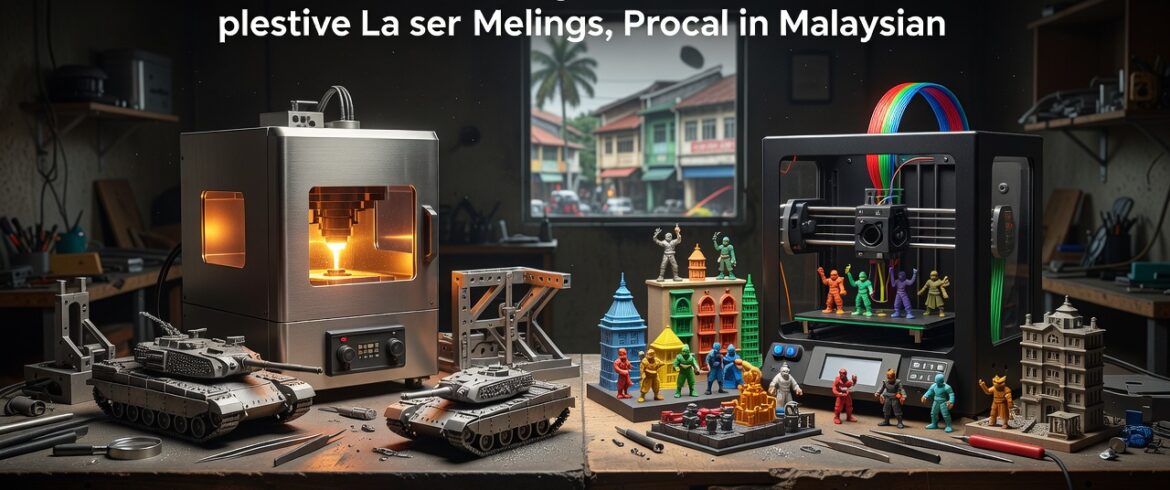

Metal vs Plastic: Choosing Metal 3D Printing Malaysia for Miniature Scale Models
A miniature succeeds when it looks right at arm’s length and still looks right after years of handling. That is why material choice sits at the centre of every serious brief. Plastic remains the fastest path to razor-sharp detail and affordable revisions. Metal, now practical through specialised metal 3D printing Malaysia partners, adds mass, heat resistance, and hardware that can be tapped or polished like jewellery. This guide helps collectors, shipyards, architects, and procurement teams choose the right process—and the right local 3D printing service—for durable miniature, maritime, and scale models.
Whether you searched 3d printing service malaysia, 3d printing near me, or 3d metal printing Malaysia, the decision is the same: match polymer or alloy to how the piece will be displayed, shipped, and touched.
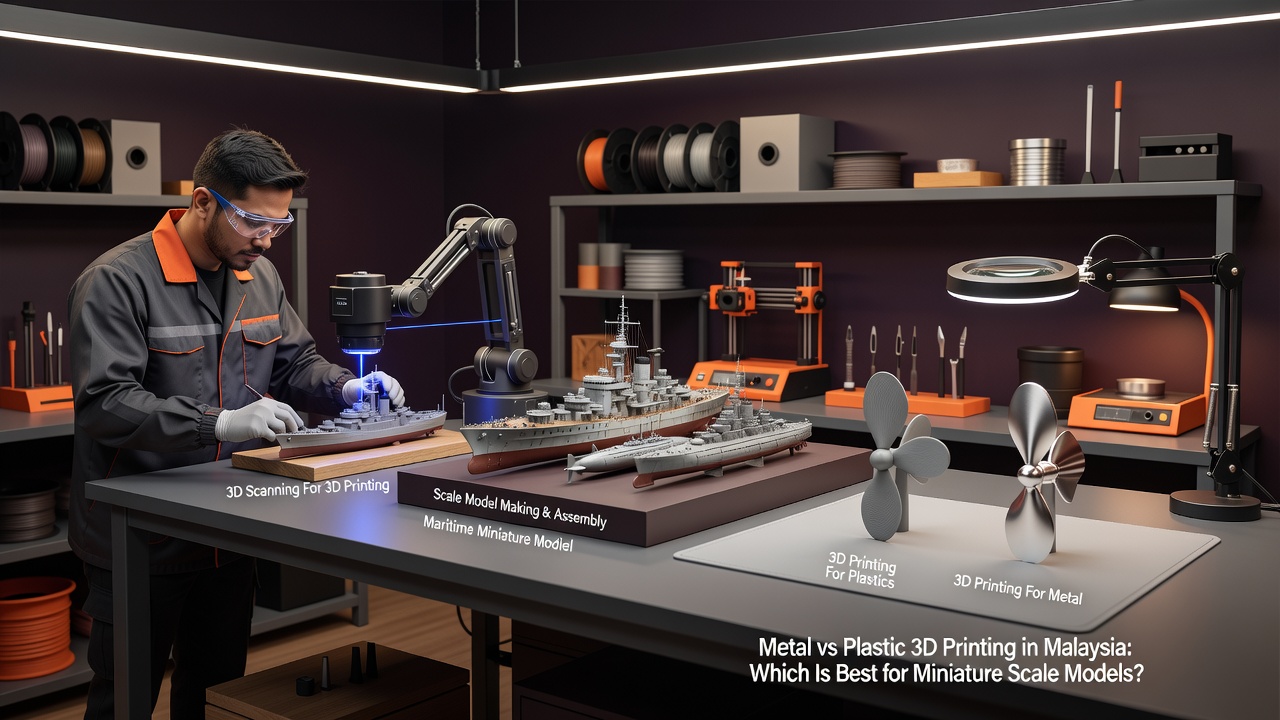
Why material choice matters for miniatures and maritime models
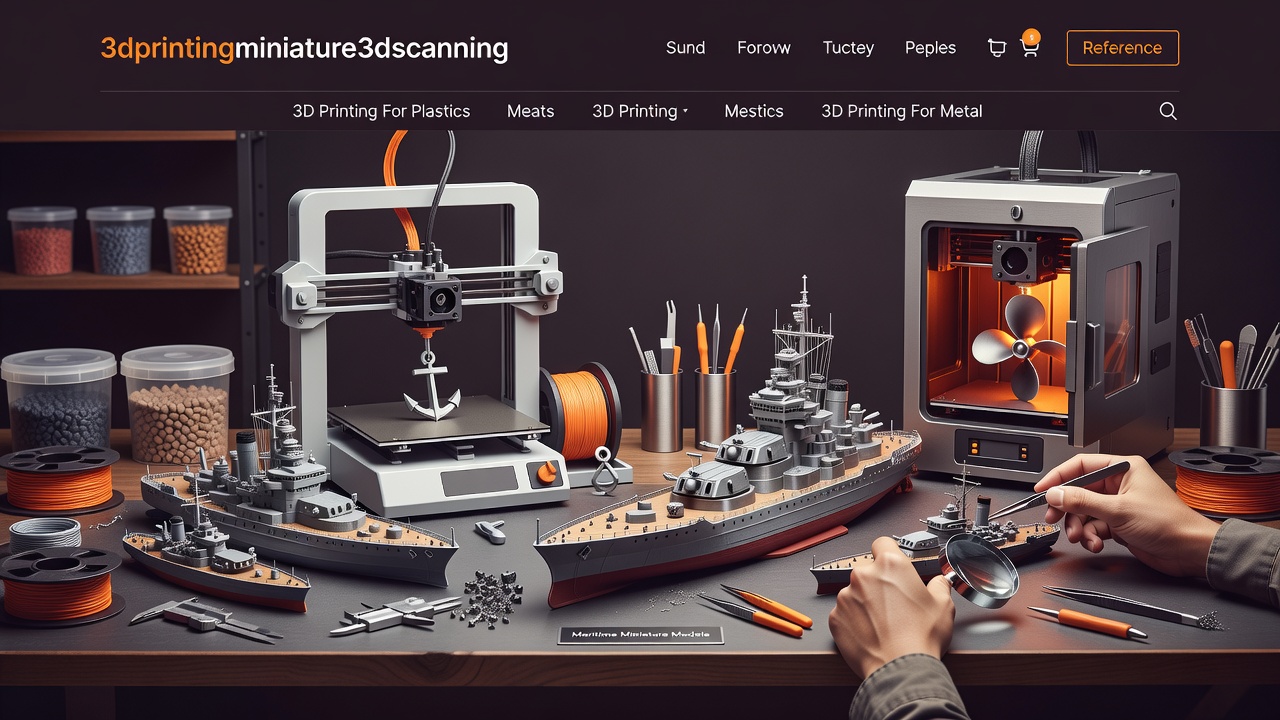
Scale models are not disposable prototypes. A 1:100 tanker for a board presentation, a locomotive in a private collection, or a lobby architectural massing model must survive lights, humidity, and curious hands. Malaysia’s climate makes this harder: heat, UV, and coastal air punish thin resin and poorly sealed nylon. A 3d printing company in malaysia that also understands paint, ballast, and vitrine design will talk about environment before it talks about layer height.
What “durable” means at miniature scale
Durability is more than a tensile-strength number. At 1:50 or 1:200 it means edge retention on railings, masts, antennae, and window frames; dimensional stability after primer, colour, and clear coat; resistance to tropical heat and gallery lighting; enough wall thickness for magnets, pins, or threaded inserts; and a convincing weight in the hand.
Maritime miniature models raise the bar further. Clients expect winches and davits to look and feel like metal. Paint-on chrome on resin is a coating; it can chip. Solid printed stainless or aluminium does not peel, and it can be left brushed or bead-blasted so the finish reads as industrial rather than toy-like.
If the model will be handled, lit, or shown in humid air, specify that environment in the RFQ before you lock a material.
Plastic 3D printing: detail, speed, and cost control
Most 3d printing malaysia enquiries still mean polymer. Stereolithography (SLA) resin is the miniature specialist’s favourite for lettering, rivets, and organic sculpture. Selective laser sintering (SLS) nylon is tougher for clips and internal structures. Fused deposition modelling (FDM) is economical for large, blocky architectural volumes that will be filled, sanded, and painted. For display-led 3D printed miniature models, 3D printing for plastics is often the entire answer.
Strengths of polymer for scale work
- High SLA resolution for faces, rivets, deck texture, and superstructure clutter.
- Fast, inexpensive iteration when a scan still needs design cleanup.
- Straightforward dyeing, priming, and multi-colour assembly.
- Low shipping weight for export clients and touring displays.
Limits you should budget around
Resin can be brittle. A scale mast that looks perfect on screen may snap in a courier bag. Some clear resins yellow. Nylon takes up moisture. FDM layer lines fight a high-gloss marine finish. If the model will tour trade stands or sit uncased in a lobby, you may need thicker walls, brass pins, or a display case. Those extras quietly close the cost gap with metal. A transparent conversation with your 3D printing service about handling is worth more than a slightly cheaper machine-time quote.
Metal 3D printing Malaysia: weight, heat, and authentic hardware
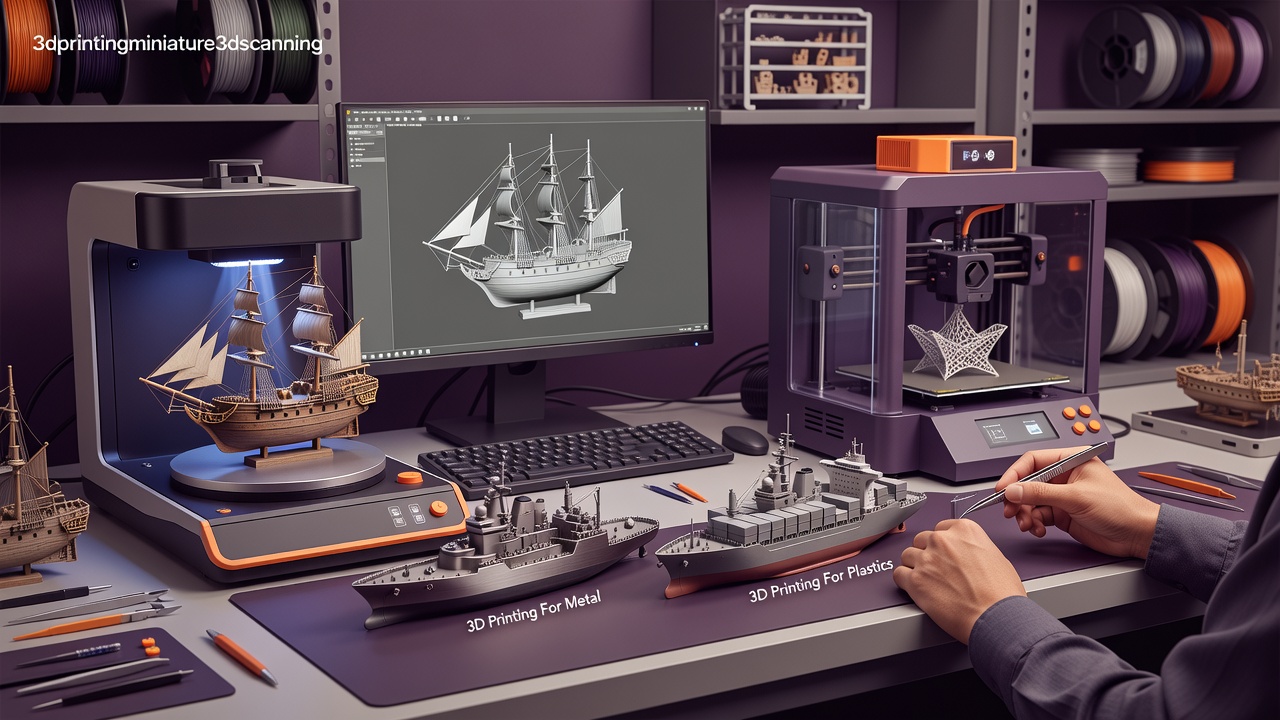
Metal additive manufacturing—most often laser powder bed fusion (DMLS or SLM), sometimes binder jetting plus sintering—builds stainless steel, aluminium, tool steel, and selected copper alloys one layer at a time. For miniature makers the point is not the headline technology. It is parts you can tap, solder, polish, or leave with a controlled industrial texture.
Workshops offering 3d metal printing Malaysia capacity already serve jewellery, jigs, and medical labs. The same machines produce propeller blades, davits, valve wheels, locomotive frames, and architectural screens that would be tedious to machine at 1:50. Shared terminology helps you compare shops fairly; the ISO/ASTM 52900 additive manufacturing vocabulary is a useful baseline, and NIST additive manufacturing guidance underlines that process control and finishing dominate quality—not only the printer brand.
When metal is the better brief
- Functional or semi-functional models: hinges, hatches, rotating radar, removable panels.
- Pieces that must survive heat from lighting or an outdoor canopy.
- Client expectation of real metal mass and ring.
- Small batches of identical fittings for a fleet of sister ships.
- Hybrid builds: polymer hull, metal superstructure details and wear parts.
Cost, finishing, and design rules
Metal powder, inert atmosphere, and support removal are expensive. Lead times are longer. Design-for-additive rules apply: self-supporting angles, powder-escape holes, and minimum walls that can look heavy at tiny scales. Post-processing—support grind, shot peen, CNC, polish, coating—often rivals the print cost. Ask for that breakdown. A capable partner offering 3D printing for metal may thicken a feature, switch a 0.3 mm railing back to resin, or print only the hardware in metal while the bulky geometry stays polymer.
How to choose: a practical framework for buyers
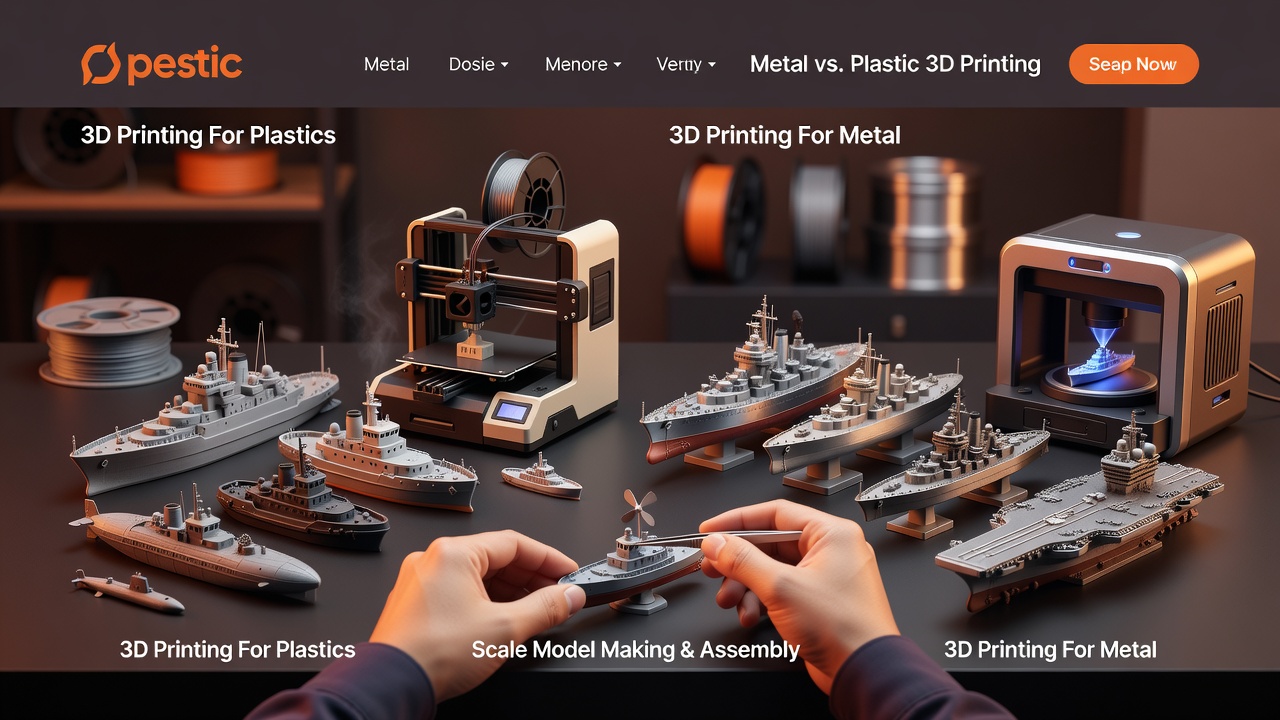
Before you send CAD, answer four questions. Will people handle it weekly, or will it sit under glass? Do you need authentic metal colour and weight, or only the look of metal? Are any walls thinner than about 0.6–0.8 mm at final scale? Is this a one-off presentation model or a short production run of parts?
If handling, authenticity, and repeatable fittings dominate, request a metal 3D printing malaysia quote. If ultra-fine sculpture, colour, and a single vitrine dominate, start with SLA or SLS. The strongest commissions often combine both in one assembly drawing—easier when plastics, metal, and scale model making & assembly live under one roof.
Scanning first, printing second
When the master exists only as a physical object—an old half-hull, a damaged die-cast, a carved maquette—start with 3D scanning for 3D printing. 3D scanning services Malaysia teams capture the artefact once. You then thicken walls for metal or preserve feather edges for resin. High-resolution 3D scanning and modeling Malaysia workflows also archive a digital twin for future reprints. A 3D scanner Malaysia or bureau capture is usually cheaper than guessing wall thickness after the first failed metal build. See how scanning, print, and assembly sit together on our services page.
Practical takeaways for Malaysian buyers
- Name the environment in the RFQ: indoor vitrine, air-conditioned lobby, or outdoor canopy.
- Ask for a material coupon printed at the same layer thickness as the model.
- For maritime miniature models, metal fittings plus a polymer hull is a proven hybrid.
- Confirm who removes supports; scars on a 2 mm railing are more visible than on a bracket.
- Prefer a local fit-up. Scale model making and assembly is where tolerances stack.
- When you compare a malaysia 3d printing service, separate machine time from painting, ballast, and the display base.
- If you are restoring an original, budget 3D scanning machine Malaysia or bureau time before you lock material.
Those seven points turn a vague “3d printing near me” search into a brief a workshop can price honestly—whether the answer is resin, nylon, stainless, or a mix.
Ready to brief a maker?
Share scale, photographs, and deadline with a workshop that already delivers 3D printed miniature models, maritime miniature models, and scanned restorations. Read about the studio on our about page, explore 3D printing and 3D scanning services, or contact the team for a material recommendation. Plastic speed or metal longevity—the right brief is how a model still looks right years from now.


Leave A Comment